




IRFA (now ICMR)
Set up
Indian Research Fund Association (IRFA) is established by Sir Harcourt Butler on November 15.
Indian Research Fund Association (IRFA) is established by Sir Harcourt Butler on November 15.
The Indian Journal of Medical
Research (IJMR) starts (now a leading peer-reviewed indexed journal of biomedical research).
The 'Beri-Beri Enquiry' under Sir Robert McCarrison is set up (now known as National Institute of Nutrition or NIN, Hyderabad).
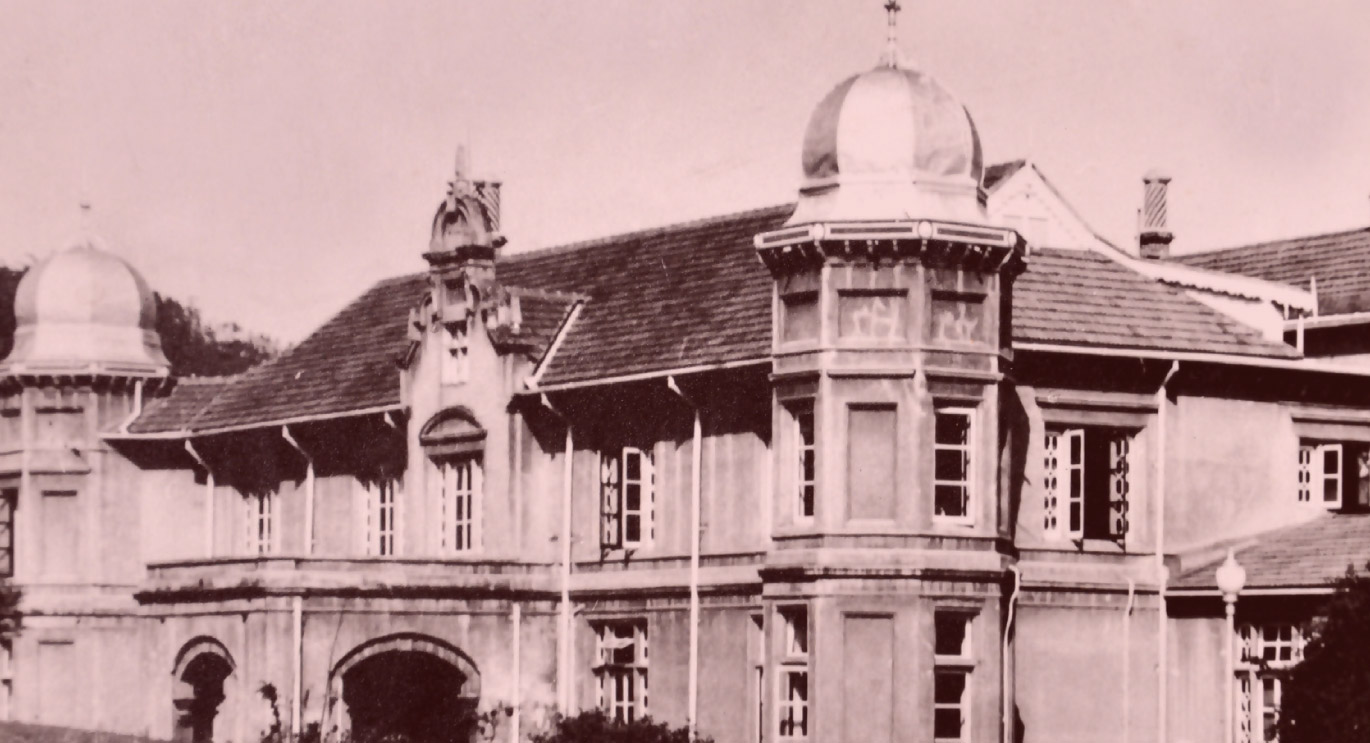
Beri Beri Enquiry in Pasteur Institute, Coonoor, birth place of National Institute of Nutrition.
Research on indigenous drugs (under Col. R.N. Chopra at the Calcutta School of Tropical Medicine, Kolkata) initiated.
Central Malaria Organization known as "Malaria Survey of India" forms under the guidance of Lt. Col. S.R. Christophers with its first station set up in Karnal.
First publication of "Records of Malaria Survey of India" (later renamed as Journal of Malaria Institute of India, then Indian Journal of Malariology, and now Journal of Vector Borne Diseases).
The Governing Body of IRFA sets up the Institute of Hygiene and Public Health at Kolkata.
The Nutritive Value of Indian Foods and Planning of Satisfactory Diets" is published for the first time for India.
The first-ever biomedical research fellowship scheme is initiated by IRFA aimed at nurturing health research in India.
Transmission cycle of the parasite of Kala-azar is elucidated, which helps in prevention and control of the disease.
Recommended Dietary
Allowances (RDA) are made for the first time for the Indian context and are updated every 10 years.
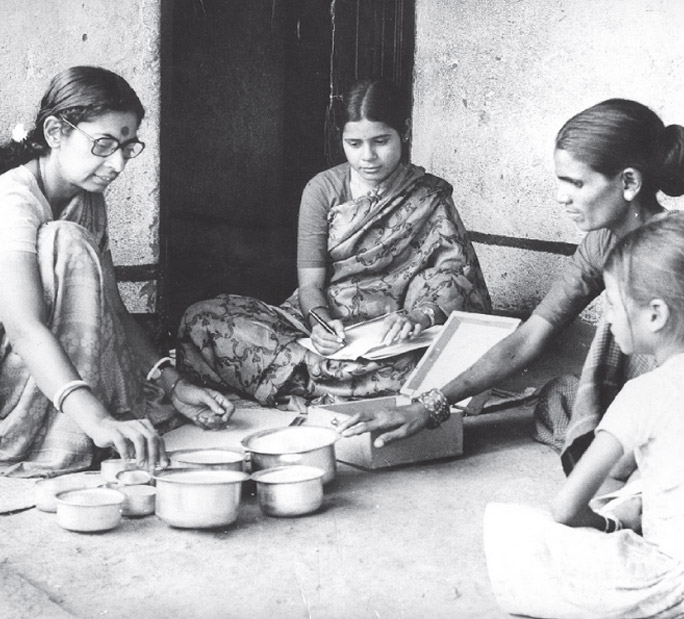
Diet Survey in Progress
National Programme for the control of Filariasis in association with the Malaria Institute of India is initiated.
IRFA is renamed to the Indian Council of Medical Research.
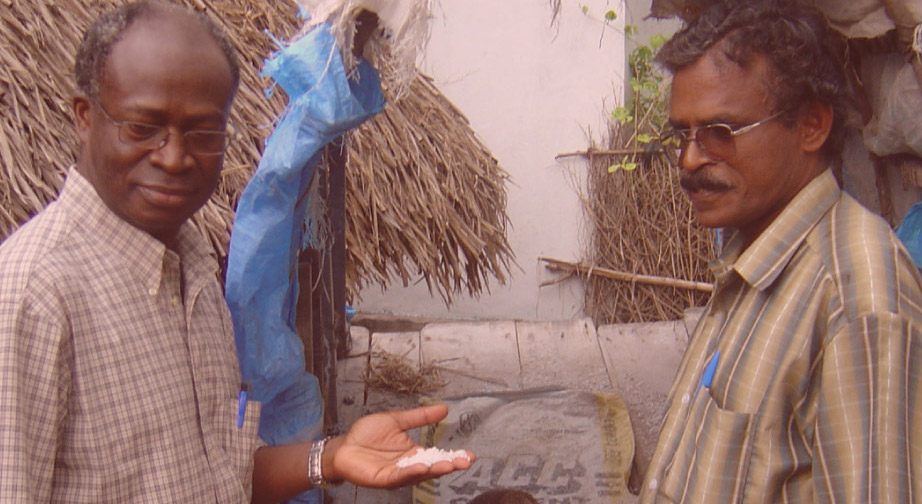
Delivery of DEC medicated salt by vendors to the community for filariasis control.
The Virus Research Centre is set up in Pune (now known as National Institute of Virology or NIV, Pune).
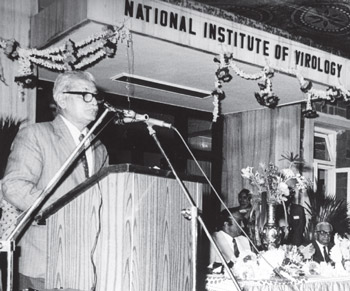
Renaming of Rockefeller Centre to National Institute of Virology.
A new blood group, the Bombay blood group is discovered by Dr. H.M. Bhatia and his team in Bombay which saves numerous lives.
The ICMR receives a grant from Col. Amir Chand for instituting a system that rewards research being conducted in Indian Medicine.
The Contraceptive Testing Unit and the Reproductive Physiology Unit is set up in Bombay (now known as National Institute for Research in Reproductive Health or NIRRH, Mumbai).
The ICMR organizes the first nation-wide tuberculosis survey.
The Tuberculosis Chemotherapy Centre is set up in Madras (now known as National Institute for Research in Tuberculosis or NIRT, Chennai).
Kyasanur forest disease (commonly called Monkey Fever) is discovered in the Sagar-Soraba district of Karnataka.
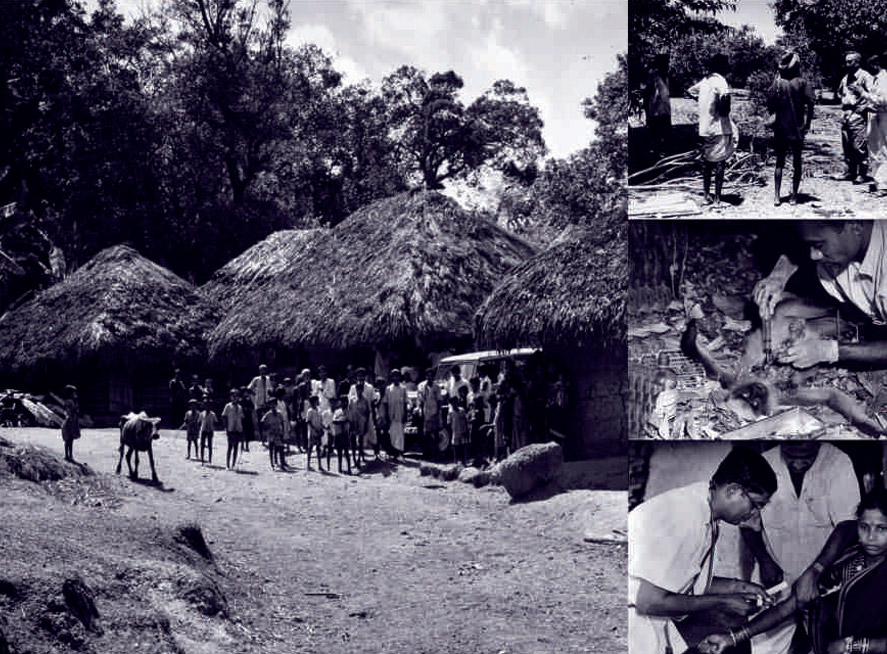
The Kyasanur Forest Fever virus: from discovery to creating vaccine.
The Blood Group Reference Centre is established at Bombay (now known as National Institute of Immunohaemotology or NIIH, Mumbai).
Demonstrated for the first time in the world that home-based treatment of TB is as successful as hospital- based treatment.
ICMR takes over the Laboratory of Animal Information Services Centre (LAISC)established in the campus of the Cancer Research Institute, Bombay, which then shifts to Hyderabad in 1976 and renamed as NCLAS in 1992 (now functioning as National Animal Resource Facility for Biomedical Research or NARFBR, Hyderabad since 2016).
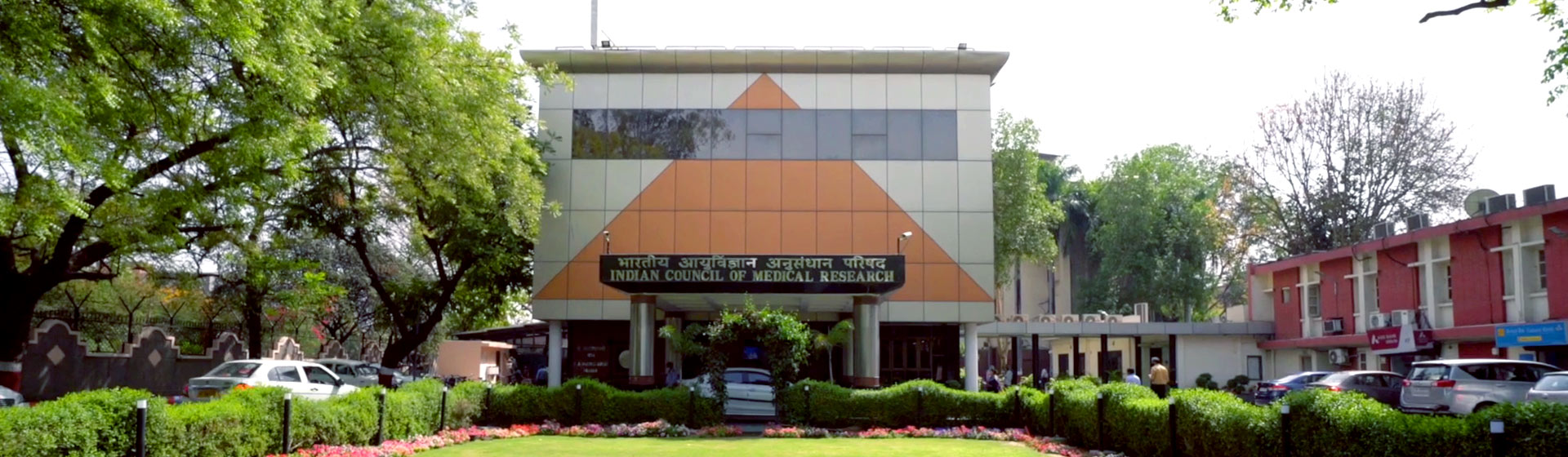
The ICMR Headquarters office moves in its newly constructed building in Ansari Nagar, New Delhi.
The Cholera Research Centre is established at Calcutta (now known as National Institute of Cholera and Enteric Diseases (NICED), Kolkata).
First ever pioneering study demonstrated that a fully supervised twice weekly regimen of streptomycin and isoniazid was as effective as unsupervised daily administration of PAS and isoniazid, laying the foundation of Directly Observed Treatment, Short Course (DOTS).
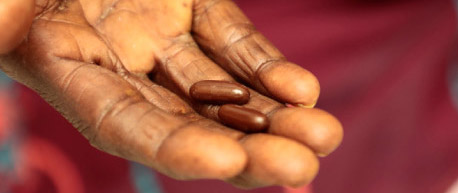
DOTS
The Indian Registry of Pathology is set up at New Delhi (now known as National Institute of Pathology or NIP).
Occupational Health Research Institute is set up at Ahmedabad (now known as National Institute of Occupational Health or NIOH).
Cell culture from mosquito tissues is established (known as Singh's cell line and used all over the world in the study of arboviruses).
Chandipura Virus is discovered as a causal agent for human encephalitis.
Chandipura Virus
Iron-folate supplement is recommended to pregnant women. (Later implemented in the national programme in 1970).
ICMR dispels the myth that protein deficiency is the main reason for malnutrition and highlights the calorie gap as the actual bottle neck in Protein Energy Malnutrition (PEM).
National Prophylaxis Programme against Nutritional Blindness due to Vitamin A Deficiency is initiated after a series of trials by ICMR.
Establishment of first Human Leukocyte Antigen (HLA) department in India to provide tissue typing facilities for renal transplantation facilities at Blood Group Research Centre (BGRC), Mumbai.
The demonstration of Oral Rehydration Therapy (ORT) to prevent mortality due to diarrhea is carried out. Home available fluids (HAF) such as Sherbat (salt, sugar, lemon, either singly or in combination) or tender coconut water and pressed rice water is found to be effective as well.
ICMR sets up a chain of Regional Centres of National Nutrition Monitoring Bureaus, in different parts of India.
ICMR demonstrates iodized salt controls endemic Goiter prevalence.
The Ina blood group antigen was discovered by Dr. Badakere and his team at NIIH, and consequently, the Indian blood group system. Antibodies against this antigen carry clinical significance.
The Vector Control Research Centre (VCRC) is established at Pondicherry.
ICMR takes over the Central JALMA Institute for Leprosy at Agra, established by the Japanese Leprosy Mission for Asia- JALMA (now known as National JALMA Institute for Leprosy and Other Mycobacterial Diseases or NJILOMD, Agra).
Institute for Research in Medical Statistics (IRMS) is set up (now known as National Institute of Medical Statistics or NIMS, Delhi).
The Malaria Research Centre is established at Delhi (now known as National Institute of Malaria Research or NIMR).
The Cytology Research Centre is set up in New Delhi (now known as National Institute of Cancer Prevention and Research or NICPR, Noida).
'Chingleput Trial' (the largest ever-trial) demonstrates inefficiency of BCG vaccine in adults.
Human Hepatitis E Virus is discovered.
Policy on ethical considerations involved in research on human subjects released.
The National Cancer Registry Project starts with the establishment of Population and Hospital based Cancer Registries.
ICMR takes over the Rajendra Memorial Research Institute of Medical Sciences (RMRIMS) at Patna to research on vectorborne diseases especially Kala Azar.
Regional Medical Research Centre at Bhubaneswar (RMRC-B) is set up.
Regional Medical Research Centre at Dibrugarh (RMRC-NE) is set up.
Regional Medical Research Centre at Port Blair (RMRC-PB) is set up.
The first genetic atlas of Indian tribes is compiled.
Regional Medical Research Centre for Tribal Health at Jabalpur is set up (now known as National Institute of Research in Tribal Health OR NIRTH).
Desert Medicine Research Centre at Jodhpur is set up (now known as National Institute of Implementation Research in Non- Communicable Diseases or NIIRNCD).
ICMR partners in India's scientifically established test tube baby at IRR (now NIRRH), Mumbai.
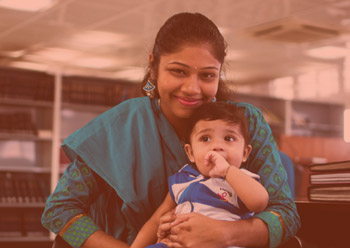
Test tube baby, Harsha with her child.
ICMR demonstrates the presence of HIV infection in India in 1980s and supports initiation of country-wide serosurveillance.
Shertalai Project: Demonstrated control of Brugian filariasis through IDVC methods.
Demonstrated bioenvironmental control of Malaria.
Initiated M.Sc. in Public Health Entomology – the only course of its kind offered in India.
National AIDS Research Institute (NARI) is established at Pune.
A new phage typing scheme for V. cholerae biotype El Tor strain is developed.
A new toxigenic strain of V. cholerae 0139 is detected and characterized.
Identified Andaman Fever as Leptospirosis, first reported In Andaman Islands among convicts during 1929.
Double fortification of cooking salt with iron and iodine is achieved.
National Institute of Epidemiology (NIE), Chennai is established.
Isolated and identified new serovar of new serogroup of Leptospira for first time causing pulmonary hemorrhages.
Miltefosine is validated as treatment for Kala Azar.
ICMR contributes significantly to Polio Research and Global Polio Eradication Program and helps in achieving Polio free status in India.
Supports development of Immune-chromatographic dipstick kit for the rapid diagnosis of cholera.
Personal protective equipment (PPE) for tobacco harvesters is produced. Seamless knitted nylon gloves are found to be most suitable, durable, and feasible for the workers.
Indigenous development of MAC-ELISA kits against dengue, chikungunya and Japanese encephalitis viruses for diagnostic use in National Vector Borne Disease Control Program (NVBDCP) is carried out.
Direct Agglutination Test (DAT) is established for early diagnosis of Kalazar.
ICMR Junior Research Fellowship (JRF) is initiated to support young scientists to pursue research.
Policy change in the national programme for Lymphatic Filariasis elimination to replace the single drug therapy with combination therapy.
Identified acute flaccid paralysis for the first time that resembles Guillean-Barre syndrome - a complication of chikungunya, carrying implications for treatment.
Regional Medical Research Centre (RMRC), Belgaum is set up (now known as National Institute of Traditional Medicine or NITM, Belagavi).
Department of Health Research (DHR) is created with support from ICMR in September.
Clinical Trial Registry of India CTRI (CTRI), a free and online public record system for registration of clinical trials being conducted in India is launched.
School of Public Health is established at National Institute of Epidemiology, Chennai.
National Institute for Research in Environmental Health (NIREH) is established at Bhopal.
Lineage 1 West Nile Virus (highly pathogenic lineage with outbreak potential in Western countries) is detected for the first time in India, in Kerala.
National Centre for Disease Informatics and Research (NCDIR) is set up at Bangalore.
Bhopal Memorial Hospital and Research Centre, Bhopal is transferred to ICMR for providing clinical services to Bhopal Gas Tragedy victims.
A new test for detection of pathogens in food is developed and transferred to industry.
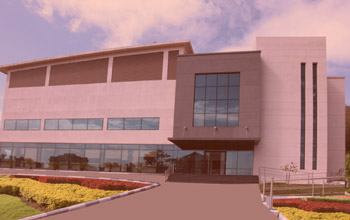
The first high end biosafety level-IV laboratory (BSL) facility is established in Pune for epidemic preparedness and management.
ICMR initiates establishment of networks of Multi-Disciplinary Research Units (MRUs), Model Rural Health Research Units (MRHRUs), Viral Research & Diagnostic Laboratories (VRDLs).
Indigenous vaccine 'JENVAC' for Japanese Encephalitis is launched.
Antimicrobial Resistance Surveillance Network established.
Dried Blood Spot (DBS) – collection kit for sub-clinical deficiency of Vitamin A and an ELISA-based kit to estimate iron in the blood are launched.
ICMR develops a micronutrient mix (containing seven micronutrients) to fight against anaemia.
India TB Research Consortium established.
National Institute of Cancer Prevention and Research becomes seventh knowledge hub of WHO-FCTC (Framework Convention on Tobacco Control), globally.
The India State Level Disease Burden Report is released which was the first comprehensive state wise disease burden estimation.
ICMR has launched three new diagnostic kits for the detection of Crimean-Congo haemorrhagic fever (CCHF) Sheep and Goat, Crimean Congo haemorrhagic fever (CCHF) in Cattle, Japanese Encephalitis virus (JEV) from Mosquitos.
Personal cooling garments for workers operating in high temperatures are developed.
Samrat Ashok Tropical Disease Research Centre is established at Rajendra Memorial Research Institute of Medical Sciences, Patna.
Successfully contained Zika, Nipah and Canine Distemper Virus.
Regional Medical Research Centre Gorakhpur (RMRC-G) is setup by upgrading the NIV field unit established in 2008.
RESEARCH 'Regional Enabler for South East Asia Research Collaboration for Health' platform launched in partnership with WHO and 10 countries to combat emerging and re-emerging infectious diseases in SE Asia Region.
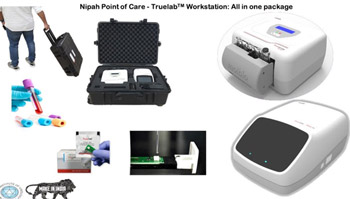
Point of Care diagnostic test for Nipah Virus is developed.
Launched Malaria Elimination Research Alliance (MERA) India to fast track malaria elimination.
E-cigarettes ban Bill passed based on evidence report by ICMR.
ICMR "National Ethical Guidelines in Biomedical and Health Research Involving Human Participants, 2017" became legally binding under New Drugs and Clinical Trial Rules, 2019.
National Ethics Committee Registry for Biomedical and Health Research (NECRBHR) is set up also known as the NAITIK Portal.
Established India-Africa Health Sciences Collaborative Platform (IAHSP) to initiate and strengthen India-Africa strategic partnership in the areas of Health Research.
Antimicrobial Resistance Hub and National Repository of Antimicrobial Resistant Bacteria (NRAMRB) at ICMR-NICED is inaugurated in September in Kolkata.

Brought out the special issue of IJMR titled "Gandhi and Health @150" to commemorate the 150th birth anniversary of Mahatma Gandhi.
SARS-CoV-2 is first reported in India by NIV Pune.
Isolated the virus.
Developed RT-PCR & ELISA for diagnosis.
Laboratory Investigations in National Institute of Virology, Pune.
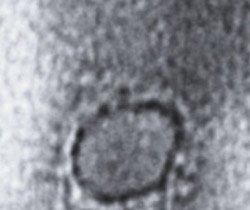
Transmission electron microscopy image of SARS-CoV-2.
You are being redirected to an external website. This site is not governed by this portal.